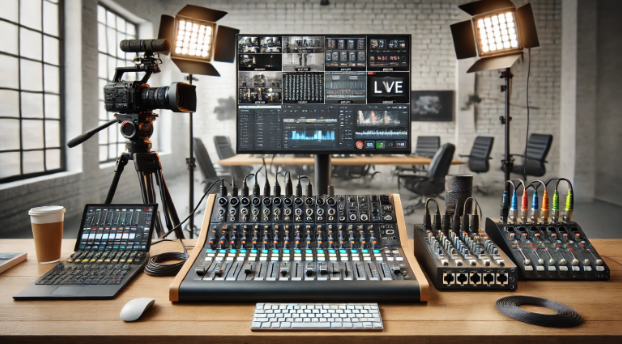
A 2 M/E production studio is a professional video production environment equipped with two Mix/Effects (M/E) buses. These studios are widely used in television broadcasting, live event production, corporate video creation, and film production. The term “M/E” refers to a system that allows multiple video sources, effects, and transitions to be combined and switched between efficiently. Having two M/E buses gives a production team greater flexibility, creativity, and control over the live production process.
This article explores the features, benefits, and applications of a 2 M/E production studio, along with its setup, equipment, and operational insights.
What is a 2 M/E Production Studio
A 2 M/E production studio is essentially a control room with advanced video switcher capabilities. “M/E” stands for Mix/Effects, which allows the operator to mix multiple video sources, apply effects, and switch between them seamlessly. The “2” in 2 M/E means that the studio has two independent M/E buses, which can operate simultaneously or separately.
This dual M/E configuration is highly beneficial for complex productions where multiple layers of graphics, video feeds, and live inputs need to be managed efficiently. In contrast, a 1 M/E system offers less flexibility and is more suitable for smaller productions.
Key Features of a 2 M/E Production Studio
- Dual M/E Buses:
Each bus can handle multiple video sources, transitions, and effects independently. This allows producers to have a primary program output on one bus and prepare the next scene or effect on the second bus. - Advanced Video Switchers:
Switchers in a 2 M/E studio support keying, chroma key, and multi-layered transitions. Operators can switch between cameras, pre-recorded clips, graphics, and live feeds smoothly. - Multiple Input Sources:
Modern studios can accommodate numerous cameras, video servers, computer feeds, and external graphics sources. This is essential for live events, talk shows, and sports broadcasts. - Integrated Audio Control:
Many 2 M/E studios include audio mixing consoles that allow operators to control sound levels alongside video transitions. This integration ensures audiovisual synchronization. - Graphics and Animation Support:
With two M/E buses, operators can overlay graphics, animations, or video effects without interrupting the main program output. This is critical for news, sports, or corporate productions that require live on-screen data or visuals. - Recording and Streaming Capabilities:
A 2 M/E studio is often equipped with recording systems and streaming encoders, making it easy to broadcast live events to TV channels, online platforms, or social media.
Equipment Needed for a 2 M/E Production Studio
Setting up a 2 M/E studio requires several essential components:
- Video Switcher: The core device for managing M/E buses and switching between video sources.
- Cameras: Multiple cameras for capturing different angles, each connected to the switcher.
- Monitors: Preview and program monitors for checking live feeds, video sources, and final output.
- Audio Mixer: To manage microphones, background music, and other audio sources.
- Video Servers: For storing pre-recorded footage, clips, and graphics.
- Intercom System: For communication between directors, camera operators, and technical staff.
- Graphics System: For overlays, lower-thirds, and animated elements.
- Streaming and Recording Hardware: To broadcast the program live or save it for post-production.
Benefits of a 2 M/E Production Studio
- Enhanced Flexibility:
Operators can prepare one scene while another is live, ensuring smooth transitions and faster production workflows. - Improved Production Quality:
With two M/E buses, adding effects, overlays, and transitions becomes seamless, creating a professional-looking broadcast. - Time Efficiency:
Live switching between multiple layers and sources without interrupting the program output saves valuable time during productions. - Versatility for Complex Productions:
Ideal for talk shows, live sports, news, or corporate events where multiple video layers, cameras, and graphics are needed simultaneously. - Redundancy and Reliability:
A second M/E bus provides redundancy, allowing producers to continue operations even if one bus faces technical issues.
Applications of a 2 M/E Production Studio
- Television Broadcasting:
News channels, sports channels, and entertainment programs use 2 M/E studios for high-quality live broadcasts. - Live Events:
Concerts, conferences, and award shows benefit from the dual-bus setup, allowing quick transitions between cameras and effects. - Corporate Video Production:
Companies can produce professional presentations, product launches, and webinars using a 2 M/E studio. - Education and Training:
Universities and online learning platforms use 2 M/E studios to create interactive lectures, online courses, and live demonstrations. - Film and Video Production:
Filmmakers can use 2 M/E setups for multi-camera shoots, visual effects, and live previews during filming.
How a 2 M/E Studio Operates
The operation of a 2 M/E studio involves several key roles:
- Director: Oversees the entire production and decides which shots and effects to use.
- Technical Director (TD): Operates the switcher, managing M/E buses and transitions.
- Camera Operators: Capture live footage based on the director’s instructions.
- Audio Engineer: Controls microphones, music, and sound effects.
- Graphics Operator: Manages on-screen graphics and animations.
During a live broadcast, one M/E bus is typically used for the current program, while the second M/E bus prepares the next scene, including graphics, effects, and camera angles. This dual setup ensures smooth switching and uninterrupted production.
Tips for Using a 2 M/E Production Studio
- Plan Ahead:
Pre-configure your sources, graphics, and effects to minimize mistakes during live production. - Train the Team:
Ensure all operators are familiar with the switcher and M/E functions to maintain smooth workflows. - Test Equipment Regularly:
Check cameras, switchers, audio, and graphics systems before any production. - Use Redundancy:
Always have backup systems for recording and streaming to prevent disruptions. - Keep Communication Open:
Use intercom systems to maintain real-time communication between directors, operators, and camera crew.
Conclusion
A 2 M/E production studio is a powerful and versatile solution for professional video production. With dual M/E buses, advanced switchers, and integrated audio-visual systems, it allows producers to handle complex live broadcasts, multi-camera events, and corporate productions efficiently. The setup ensures smooth transitions, high-quality output, and operational redundancy. Whether you are producing live TV, webinars, or corporate videos, a 2 M/E studio provides the tools and flexibility needed for professional results.
FAQs
Q1: What does M/E mean in a production studio?
A: M/E stands for Mix/Effects. It allows video sources to be mixed, layered, and switched with transitions and effects.
Q2: Why do studios use 2 M/E buses instead of 1?
A: Two M/E buses provide more flexibility, allowing one bus to handle the live output while the other prepares the next scene or effects.
Q3: Can a 2 M/E studio handle live streaming?
A: Yes, most modern 2 M/E studios are equipped with streaming encoders to broadcast live events online.
Q4: What types of productions benefit from a 2 M/E studio?
A: TV broadcasts, live events, corporate videos, online courses, and multi-camera film productions all benefit from a 2 M/E setup.
Q5: Is it difficult to operate a 2 M/E studio?
A: It requires trained operators and coordination among the production team, but with experience, it ensures smooth and professional output.