Highest Powerplay Score in IPL overs shape the match narrative, because fielding restrictions reward intent and punish hesitation. Moreover, only two fielders can patrol outside the ring, so clean striking turns good starts into decisive advantages. Consequently, captains prioritize dynamic openers, proactive running, and strike-rotation plans that keep bowlers uncomfortable and fields fractured.
Additionally, powerplay strategy is never one-size-fits-all. Because pitches vary and matchups shift, smart teams adjust lengths, lines, and shot maps on the fly. Furthermore, analysts track swing, seam, and pace-off responses to predict optimal balls per boundary. Therefore, decision speed during the first six overs often separates contenders from passengers.
Highest Powerplay Score in IPL: The Current Benchmark
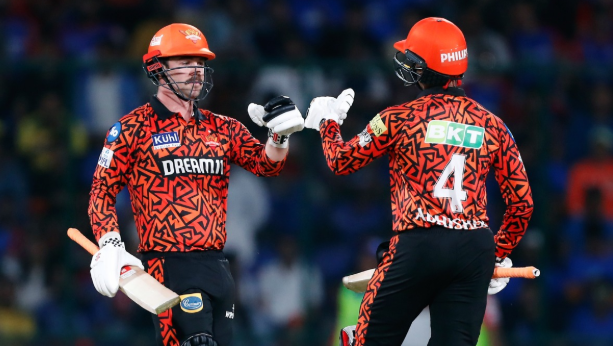
Currently, the highest powerplay score in IPL history stands at 125 without loss, produced by Sunrisers Hyderabad against Delhi Capitals, a burst that redefined six-over ceiling and raised planning standards across franchises. Importantly, that spree combined elite intent with high shot quality and ruthless strike farming.
Moreover, several surges cluster just beneath that mark and validate the era of fast starts. Specifically, Sunrisers Hyderabad also delivered 107 without loss, while Kolkata Knight Riders smashed 105 without loss, and Chennai Super Kings stormed to 100 for two, each providing blueprints for boundary frequency and risk control.
Why Explosive Powerplays Happen: Tactics, Matchups, Conditions
Firstly, elite pairs target matchup funnels. Because right-left combos distort lines and lengths, bowlers lose rhythm and repeatability. Consequently, openers focus on specific release points, boundary pockets, and sweep-to-slap transitions. Furthermore, pacing the first three overs conserves wickets, while selective violence in overs four to six multiplies margin.
Secondly, batters weaponize angles. Since modern stances open hips and extend reach, they access both square boundaries and straight channels. Consequently, scoop, ramp, and pick-up mechanics punish back-of-length plans. Additionally, batters read fields early, then toggle trajectories: flat over mid-off, lofted over cover, or rolled behind square with late wrists.
Thirdly, bowling groups counter with deception. Because cutters, hard lengths into the hip, and surprise bouncers disrupt base, captains demand fielders who cut twos and choke singles. Moreover, pre-set traps—short third, deep point, and fine leg—invite false strokes. However, when execution slips, momentum spikes, and boundaries stack in harmful clusters.
Team Patterns Behind the Highest Powerplay Score in IPL
Sunrisers Hyderabad’s top order thrives on partnership clarity. Importantly, Travis Head and Abhishek Sharma synchronize roles cleanly: one hammers pace through the ‘V’, while the other carves square with early bat speed. Moreover, their rapport fuels tempo layering, quick reads, and fearless continuation after early boundaries.
Kolkata Knight Riders showcase aggression via freedom licenses. Since openers there historically received runway to swing hard, fielding teams often protected square only to concede straight. Consequently, bowlers overcorrect, and pull-length balls sit up. Additionally, split-second misreads on pace-off balls invite power-base drives and slingy pick-ups.
Chennai Super Kings deliver structured surges built on strike farming. Because compact techniques plus depth down the order reduce fear of collapse, openers press gaps, not just ropes. Moreover, calculated risks arrive late in the phase, when bowlers chase lines and lose control. Consequently, CSK convert par starts into dominant platforms.
How to Read Powerplay Data Like an Analyst
Start with balls-per-boundary rather than raw runs, because frequency normalizes pitch and outfield variance. Moreover, pair that with control percentage to see whether aggression arrived with sustainable mechanics. Additionally, examine phase splits—overs one to three, then four to six—to gauge risk timing and wicket conservation.
Then, layer matchup indices. Because left-handers shift release lines and mid-on/mid-off positions, isolate LH-specific boundary rates against off-stump channels. Furthermore, add swing deviation for new-ball overs and speed-off success for cutters. Consequently, your model predicts boundary clusters before they happen and flags overs primed for acceleration.
Finally, check intent proxies. Since average bat distance at impact and early entry angles correlate with lofted contact, monitor those to confirm eye-in confidence. Moreover, tack on quick singles per over to measure baseline pressure. Therefore, even when ropes slow, strike rotation guards momentum and prevents dot-ball spirals.
The Ripple Effect: What a Record Powerplay Does to a Match
Psychology tilts fast when scoreboards gallop. Because asking rates balloon for chasers, captains gamble early with matchup overs, often burning trump cards prematurely. Consequently, middles become softer for the batting side. Moreover, fielders retreat deeper, singles open, and boundary denial collapses under relentless angle changes.
Conversely, bowlers from the defending team may chase miracle balls. Since desperation fuels over-pitching and slot offerings, quality batters sense shapes early and launch. Additionally, even tidy overs feel insufficient when the equation skews. Therefore, teams that absorb the first surge and hold composure frequently claw back through disciplined lengths.
Building Repeatable Powerplay Success: A Practical Framework
Recruit skill complements rather than stylistic clones. Because contrast complicates plans, combine a seam-line driver with a wristy square-hitter. Moreover, empower both with role clarity: one anchors strike rotation while the other targets specific overs. Consequently, bowlers face dual stressors and leak control when they chase safer lines.
Design over-by-over triggers. Since information density increases with each delivery, encode conditional plans: if two early boundaries land, escalate paddle risk in the same over; otherwise, extend sighting until over four. Additionally, codify non-negotiables—dot-ball avoidance and deep-midwicket protection. Therefore, intent stays high without reckless tilt.
Invest in pre-activation and visual cues. Because first-six overs reward fast starts, batters benefit from simulated new-ball swings, low-tee ranges, and hard-length machines. Moreover, captains should pre-plan field scans and calling protocols. Consequently, communication stays crisp, and micro-advantages—angles, gaps, edges—convert into early runs.
Conclusion
Powerplay dominance rarely happens by accident, because elite starts mix matchup science with fearless execution. Moreover, the highest powerplay score in IPL proves that ceiling shatters when intent, rhythm, and roles align perfectly. Consequently, use the frameworks above to evaluate starts, predict surges, and celebrate six-over masterclasses with sharper eyes.
FAQs
What is the highest powerplay score in IPL?
Currently, the benchmark is 125 without loss by Sunrisers Hyderabad against Delhi Capitals, a blistering first six overs that reset expectations for tempo and pressure creation across the league. Moreover, that haul showcased ruthless matchup targeting and near-perfect strike management from ball one.
Which teams consistently post big powerplay scores?
Sunrisers Hyderabad lead the leaderboard with multiple massive bursts, while Kolkata Knight Riders and Chennai Super Kings appear frequently near the top. Moreover, each unit pairs stylistic freedom with structured risk to unlock boundary clusters without surrendering early wickets, sustaining pressure through overs four to six.
How important are right-left opening pairs in the powerplay?
Very important, because angle disruption multiplies boundary options and forces bowlers into low-percentage lines. Moreover, coordinated roles let one batter attack pace while the partner manipulates fields square. Consequently, bowlers miss lengths, captains shuffle plans, and gaps widen across cover, mid-wicket, and third-man regions.
Does a huge powerplay always guarantee victory?
Not always, although probability tilts heavily. Because early runs shift psychology and resources, chasing sides may still counter with disciplined lengths and smart fielding. Moreover, sustained middle-over control and death execution can invert momentum, especially when batters mis-time accelerations or over-chase aerial options late.
How can fans analyze powerplay quality beyond raw runs?
Focus on balls-per-boundary, control percentage, and two-per-over rate. Moreover, track phase splits, matchup indices, and pace-off effectiveness to judge sustainability. Consequently, you will separate repeatable skill from noisy spikes, understand role clarity, and forecast whether a batting unit can maintain pressure after over six.